Porcelain and Ceramic Veneers
Dental ceramics can reproduce translucency, surface texture, and subtle color variation. Material selection and thickness depend on the underlying tooth color, available enamel, bite, and desired shade.
Serving Atlanta, Georgia & surrounding areas

Veneers in Atlanta
Plan a natural-looking smile with veneers shaped around your facial proportions, tooth color, bite, and personal goals.
Veneer consultation
Choosing a veneer Atlanta provider starts with finding someone who listens before recommending treatment. Veneers can change tooth color, shape, length, proportion, and the appearance of small gaps, but the result should still look like your smile. Atlanta Cosmetic Dentists plans each case around your facial proportions, visible tooth display, gumline, bite, and preferences.
We begin by discussing what you like about your smile and what you want to change, and our cosmetic dentistry specialists serving Atlanta, GA then perform a clinical examination to determine whether veneers are suitable and whether any oral health issue should be addressed first. Photographs, scans or impressions, shade records, and bite information may be used to plan the result. This preparation gives you a clearer idea of the proposed tooth shape and overall character before treatment moves forward.
Our Buckhead ZIP of 30305 is convenient for patients who live or work near Peachtree Road and for those traveling through the Lenox and Buckhead commercial districts. Patients also come from Midtown, Brookhaven, and Sandy Springs. Appointment timing and the number of visits are discussed during consultation so the plan works with the patient’s schedule.
Treatment possibilities
A veneer is a thin restoration bonded to the front and, when needed, the edge of a tooth. Porcelain veneers are commonly selected for their color stability and enamel-like optical qualities. Composite veneers use tooth-colored resin shaped directly or indirectly, and they may require less treatment time but generally behave differently from ceramic in stain resistance, surface gloss, repairability, and longevity.
Veneers may be considered for persistent discoloration, worn or chipped edges, irregular tooth shape, mild spacing, or a smile that looks uneven. They are not the automatic answer to every concern. Active decay, gum inflammation, too little sound enamel, severe tooth grinding, or a bite that places excessive force on the planned restorations may affect candidacy.
The number of treated teeth depends on the smile line and goal. One veneer can restore a single mismatched tooth, while a broader case may include the teeth that show during a full smile. Matching untreated neighboring teeth is especially important in limited cases.
Materials and design
Dental ceramics can reproduce translucency, surface texture, and subtle color variation. Material selection and thickness depend on the underlying tooth color, available enamel, bite, and desired shade.
Composite resin can be shaped and polished to alter tooth form or repair a defect. It may be easier to repair than ceramic, although it can stain or lose polish sooner.
Preparation may range from minimal enamel reshaping to more extensive reduction. So-called no-prep treatment is suitable only when added material will not make the teeth look bulky or interfere with the bite.
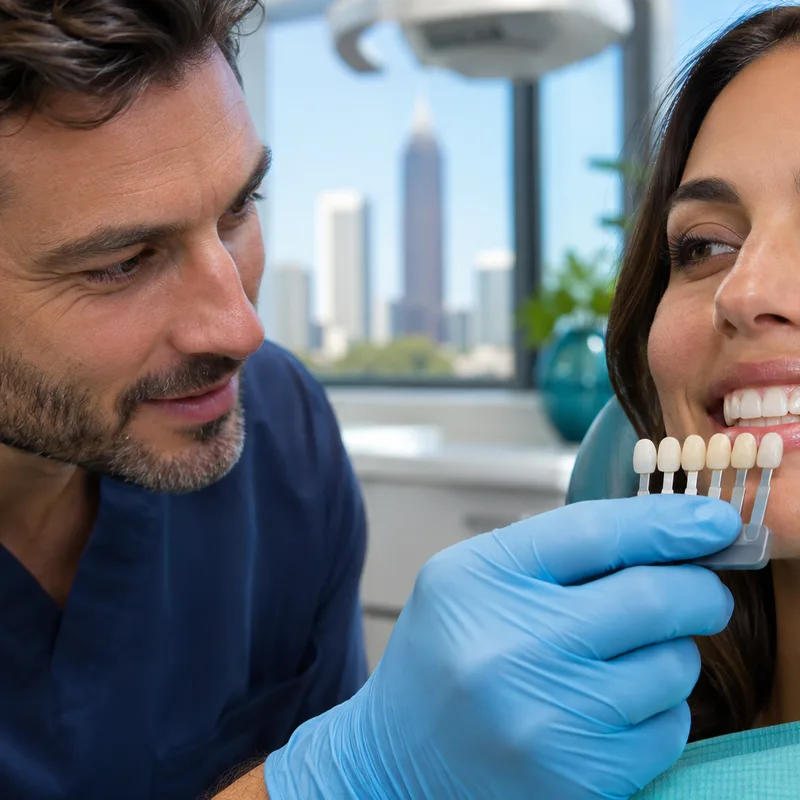
Natural teeth are not a flat block of white. Hue, value, translucency, edge effects, line angles, and surface texture all influence whether veneers blend with the face and surrounding teeth.
The position and health of the gums frame each veneer. Uneven tissue, inflammation, or a disproportionate tooth outline may need attention before final restorations are made.
The dentist evaluates how the front and back teeth meet during biting and jaw movement. This helps identify heavy contacts that could increase the risk of chipping or debonding.
What to expect
The process starts with your concerns, desired shade, treatment history, and expectations. The dentist examines the teeth, gums, enamel, existing restorations, and bite, then discusses veneers and reasonable alternatives.
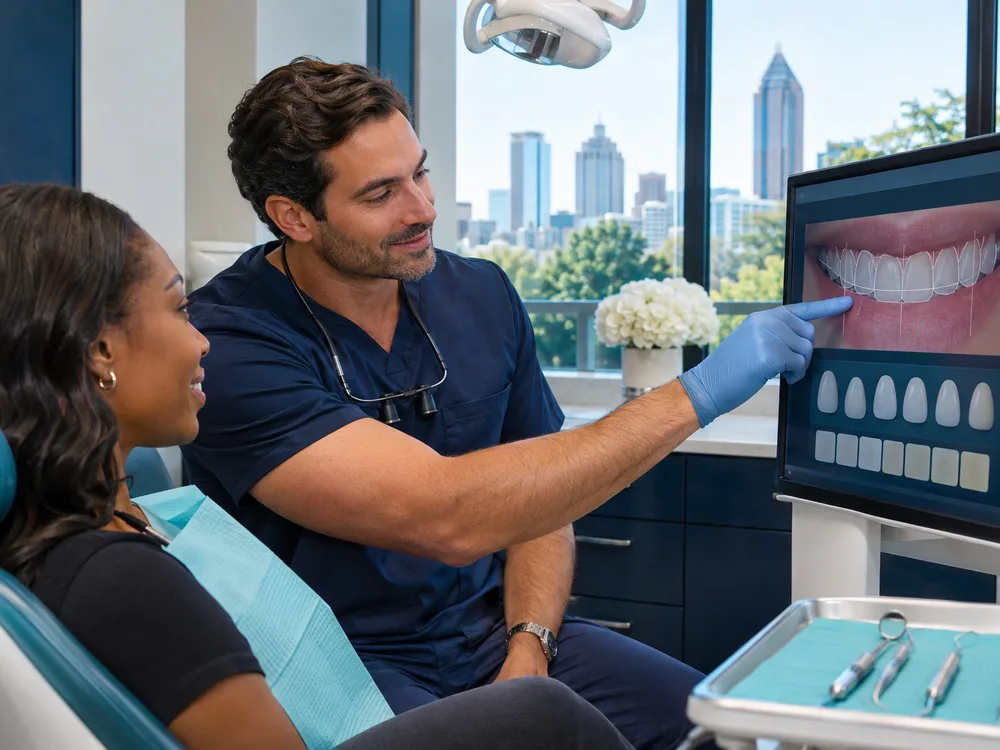
Clinical photographs, digital scans or impressions, and shade information document the starting point. A digital design or diagnostic wax-up may be used to study tooth dimensions and show the direction of the proposed result.
When appropriate, a mock-up can transfer the planned contours to the mouth for evaluation. You can discuss length, width, edge position, speech, and overall appearance before final preparation.
If preparation is needed, the dentist removes the amount required for the selected material and design. Impressions or scans are recorded, and temporary veneers may protect prepared teeth while the laboratory makes the final ceramics.
The final veneers are checked individually and together for fit, contacts, shade, proportion, and bite. After approval, the teeth and ceramic surfaces are conditioned according to the bonding system, and the veneers are bonded with resin cement.
A follow-up visit checks the gums, bite, comfort, and home care. Routine examinations, professional cleanings, daily plaque control, and any recommended protective appliance help maintain the veneers and supporting teeth.
Treatment fees
Porcelain veneers in Atlanta typically cost about $1,500 to $3,000 per tooth, while direct composite veneers often range from about $500 to $1,500 per tooth. These are general, nonbinding estimates, and a multi-tooth plan can differ substantially.
Final cost depends on the number of teeth, ceramic or composite choice, case complexity, diagnostic records, laboratory work, temporary restorations, and whether preliminary dental care is needed. Cosmetic treatment is often excluded from dental benefits, although policies vary. The exact fee and included treatment are confirmed after the consultation and clinical examination.
Choosing a provider
The best veneers Atlanta patients can choose are the ones planned for their own teeth, bite, and facial proportions. Look beyond very white photographs. Ask to review cases with goals similar to yours, including close views that show margins, gum health, texture, and how the restorations blend with untreated teeth.
A qualified provider should explain the diagnosis, material choice, preparation requirements, alternatives, limitations, expected maintenance, and full treatment scope. Ask who designs and fabricates the ceramic work, how shade is communicated to the dental laboratory, whether a preview is available, and what happens if you request a design change before final bonding.
Be cautious with the phrase “veneer tech Atlanta.” Veneers are dental restorations, and tooth preparation, bonding, bite adjustment, and management of the gums require clinical diagnosis and treatment by an appropriately licensed dentist. The Georgia Board of Dentistry regulates dentistry in the state and provides public license verification.
A complete consultation should also cover alternatives. Whitening may be enough when the main concern is color. Orthodontic treatment may be more appropriate for crowding or bite correction. Dental bonding may suit a small chip, while crowns are usually considered when a tooth needs greater structural support.
Long-term care
Veneers need the same basic plaque control as natural teeth. Brush with a soft toothbrush and nonabrasive fluoride toothpaste, clean between the teeth daily, and keep regular dental examinations and professional cleanings. Tell the dental team that you have veneers so instruments and polishing products can be selected appropriately around the margins.
Avoid using veneered teeth to open packaging or bite hard nonfood objects. Patients who clench or grind may be advised to wear a custom night guard. A protective mouthguard may also be appropriate for contact sports. These measures cannot guarantee that a veneer will never chip, but they can reduce avoidable stress.
Porcelain is resistant to external staining, while the bonding interface, natural teeth, and composite restorations can change over time. Gum position can change too. Periodic assessment helps identify a rough edge, bite change, inflammation, decay, or a small chip before it becomes a larger problem. Veneers are durable restorations, but they are not permanent and may eventually require repair or replacement.
Bring your smile goals, questions, and examples of results you like to a consultation. You will receive a case-specific discussion of candidacy, materials, preparation, timing, and fees before deciding whether to proceed.
Check AvailabilityCommon questions
You may be a candidate if your teeth and gums are healthy, enough sound enamel is available for reliable bonding, and veneers can meet your cosmetic goals without creating bite problems. An examination at the Atlanta office is needed to assess decay, gum inflammation, grinding, existing restorations, and tooth position. Some patients benefit from whitening, orthodontics, or gum care before veneers.
A porcelain veneer case commonly requires a consultation and planning visit, a preparation visit, and a separate bonding appointment after laboratory fabrication. More time may be needed for a diagnostic wax-up, mock-up, gum healing, whitening, or other preliminary care. Direct composite veneers may be completed faster in suitable cases.
Some enamel reduction may be required, but the amount depends on tooth position, existing color, material thickness, and the planned shape. Adding ceramic to a prominent or crowded tooth without preparation can create excess bulk. Minimal-prep or no-prep veneers are appropriate only for selected cases.
Veneers should generally be treated as a long-term commitment because removing enamel can make the procedure irreversible. A truly additive case may require little or no preparation, but that is determined by tooth position and design rather than preference alone.
The right number depends on how many teeth show when you smile, which teeth need correction, and whether untreated teeth can be matched predictably. A single veneer may address one damaged tooth, while a wider smile design may involve several visible teeth. Photographs and a mock-up can help determine the appropriate number.
Veneers can sometimes disguise mild spacing, small rotations, or uneven tooth contours, but they do not move teeth or correct the underlying bite. Using veneers to mask significant crowding may require unnecessary tooth reduction or produce bulky contours. Orthodontic treatment may be the more conservative choice when position is the main issue.
Dental insurance commonly excludes veneers placed solely for cosmetic reasons, but coverage depends on the policy and the clinical reason for treatment. A plan may treat restoration of a damaged tooth differently from an elective smile change. The insurer determines benefits under the patient’s contract.
Choose a licensed dentist who documents the diagnosis, discusses alternatives, shows relevant clinical work, and gives you a written treatment plan with material, tooth count, timing, and fees. Ask about mock-ups, laboratory communication, bonding protocols, bite evaluation, and follow-up care. Georgia dental licenses can be checked through the Georgia Board of Dentistry’s public verification resources.
Your veneer consultation
Meet with Atlanta Cosmetic Dentists in Atlanta, GA 30305 to discuss your concerns and receive a veneer plan based on your teeth, bite, gum health, and preferred result.